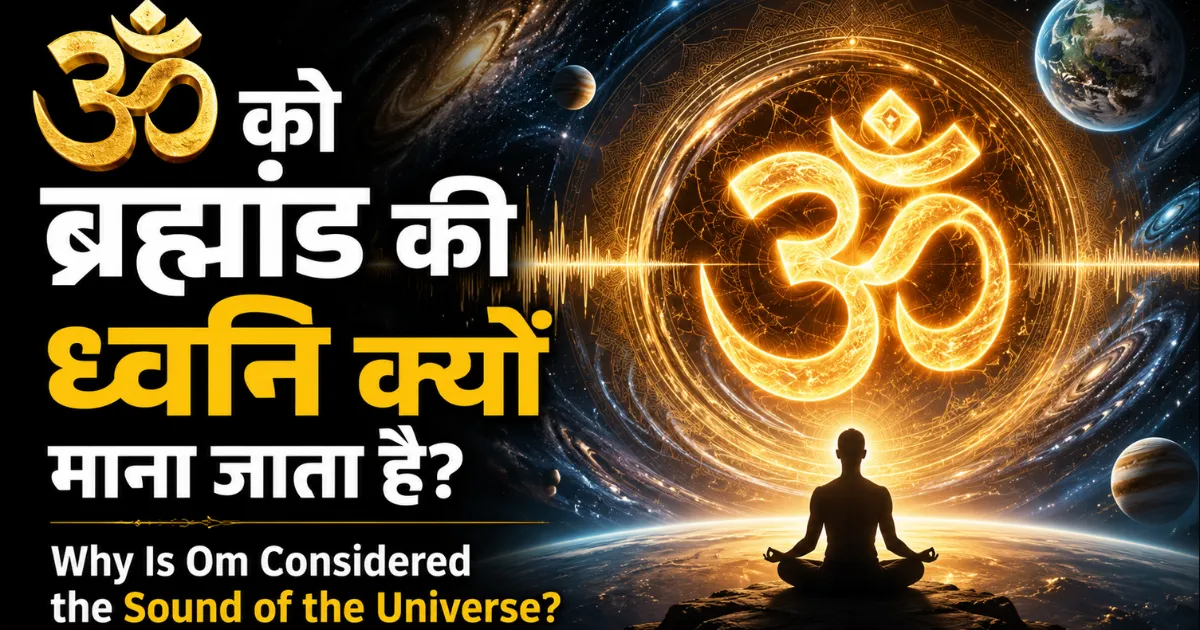
क्या आपने कभी सोचा है कि हिंदू धर्म में किसी भी पूजा, मंत्र, ध्यान या वेद-पाठ की शुरुआत अक्सर ॐ से ही क्यों होती है? यह केवल एक धार्मिक ध्वनि नहीं है। यह एक ऐसा प्रतीक है जिसमें ध्वनि, चेतना, ध्यान और ब्रह्मांड की गहरी समझ छिपी हुई है।
English Translation:
Have you ever wondered why most Hindu prayers, mantras, meditation practices, and Vedic chanting often begin with Om? It is not just a religious sound. It is a symbol that carries within it sound, consciousness, meditation, and a deep understanding of the universe.
मांडूक्य उपनिषद कहता है कि ॐ ही यह सब है - जो भूतकाल में था, जो वर्तमान में है, जो भविष्य में होगा, और जो समय से भी परे है। इसका अर्थ यह नहीं कि ॐ कोई साधारण आवाज़ है, बल्कि यह कि ॐ उस पूर्ण अस्तित्व का प्रतीक है जिसे वेदांत ब्रह्म कहता है।
English Translation:
The Mandukya Upanishad says that Om is all this - whatever was in the past, whatever exists in the present, whatever will exist in the future, and even that which is beyond time. This does not mean Om is an ordinary sound; it means Om represents the total reality that Vedanta calls Brahman.
मांडूक्य उपनिषद आगे आत्मा को चार अवस्थाओं से समझाता है - जाग्रत, स्वप्न, सुषुप्ति और तुरीय। ॐ के “अ”, “उ”, “म” और उसके बाद की शांति को इन अवस्थाओं से जोड़ा गया है। यानी ॐ हमें बाहर की दुनिया से अंदर की चेतना तक ले जाने वाला मार्ग बन जाता है।
English Translation:
The Mandukya Upanishad explains the Self through four states - waking, dreaming, deep sleep, and Turiya. The sounds “A”, “U”, “M”, and the silence after Om are linked with these states. In this way, Om becomes a path that takes us from the outer world to inner consciousness.
आज विज्ञान भी यह मानता है कि ध्वनि कंपन है। जब हम ॐ का उच्चारण धीरे, गहराई और स्थिरता से करते हैं, तो श्वास लंबी होती है, मन एकाग्र होता है और शरीर में एक शांत लय बनती है। यह कहना वैज्ञानिक रूप से सही नहीं होगा कि “ब्रह्मांड सचमुच ॐ से बना है”, लेकिन यह अवश्य कहा जा सकता है कि ॐ मनुष्य को ध्वनि, श्वास और चेतना की एक गहरी अवस्था से जोड़ता है।
English Translation:
Modern science also understands sound as vibration. When Om is chanted slowly, deeply, and steadily, breathing becomes longer, the mind becomes focused, and the body enters a calmer rhythm. It would not be scientifically correct to say that “the universe is literally made of Om,” but it is meaningful to say that Om connects human beings with sound, breath, and deeper consciousness.
ॐ हमें यह सिखाता है कि सत्य केवल बाहर खोजने की वस्तु नहीं है। उपनिषद का संकेत है कि जिस चेतना से हम दुनिया को देख रहे हैं, वही चेतना सत्य की खोज का सबसे निकट द्वार है। इसलिए ॐ का जप केवल आवाज़ निकालना नहीं है; यह अपने भीतर लौटने की प्रक्रिया है।
English Translation:
Om teaches us that truth is not only something to be searched outside. The Upanishadic message suggests that the very consciousness through which we see the world is the nearest doorway to truth. Therefore, chanting Om is not merely producing a sound; it is a process of returning within.
अगली बार जब आप ॐ बोलें, तो जल्दी मत कीजिए। पहले गहरी सांस लीजिए। फिर “अ” को पेट से, “उ” को छाती से, “म” को मस्तिष्क में कंपन की तरह अनुभव कीजिए। अंत में कुछ क्षण चुप रहिए। हो सकता है आपको समझ आए कि हमारे ऋषियों ने ध्वनि को साधना क्यों बनाया।
English Translation:
Next time you chant Om, do not rush. First take a deep breath. Feel “A” from the lower body, “U” through the chest, and “M” as a vibration near the head. Then remain silent for a few moments. You may begin to understand why our Rishis turned sound into a spiritual practice.
उत्तरदाता :-

Sachin Verma
Shivpuri, MP
प्रश्नकर्ता :-
Gupt Sadhak
HI App

👁 8126

👁 10805
👁 10427
👁 3611
👁 6230
👁 5483

👁 5782

👁 4434

HinduIntellectual: Explore 700+ shastras, Ramcharitmanas, bhajans, aartis, mantras, festivals, contests, and spiritual insights. A platform for Hindus to connect, learn, and celebrate Sanatan Dharma.
support@hinduintellectual.com