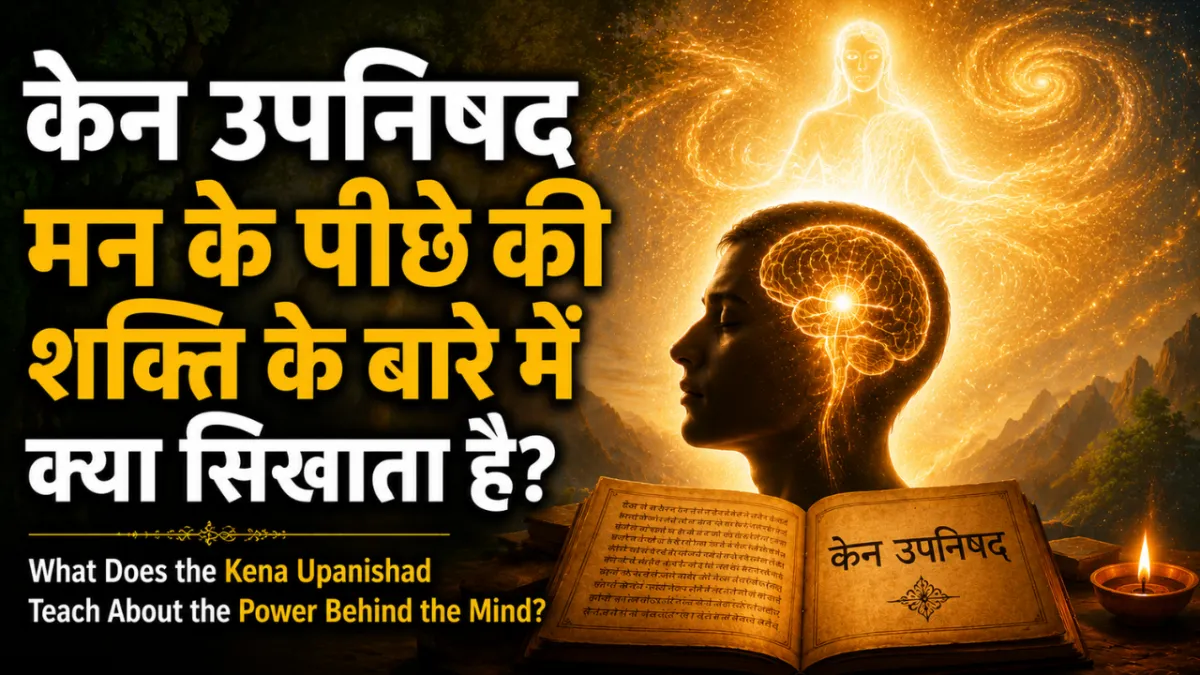
हम सोचते हैं कि “मैं सोच रहा हूँ”, “मैं देख रहा हूँ”, “मैं बोल रहा हूँ।” लेकिन केन उपनिषद एक गहरा प्रश्न पूछता है - मन को सोचने की शक्ति कौन देता है? प्राण को चलाने वाला कौन है? आंख और कान को उनके कार्य में लगाने वाली सत्ता क्या है?
English Translation:
We think, “I am thinking,” “I am seeing,” “I am speaking.” But the Kena Upanishad asks a deeper question - who gives the mind the power to think? Who moves prana? What is the force behind the eyes and ears?
यह प्रश्न हमें सीधे भीतर ले जाता है। क्योंकि सामान्य रूप से मनुष्य वस्तुओं को देखता है, विचारों को पकड़ता है और शब्दों में उलझ जाता है। लेकिन केन उपनिषद कहता है - पहले यह जानो कि देखने, सुनने और सोचने की शक्ति आती कहां से है।
English Translation:
This is not an ordinary question. It takes us directly inward. Usually, a person looks at objects, follows thoughts, and becomes trapped in words. But the Kena Upanishad says - first understand where the power of seeing, hearing, and thinking comes from.
केन उपनिषद उत्तर देता है कि वह सत्ता कान का कान, मन का मन, वाणी की वाणी, प्राण का प्राण और आंख की आंख है। इसका अर्थ यह है कि इंद्रियां स्वयं अंतिम शक्ति नहीं हैं। उनके पीछे एक गहरी चेतना है, जिसके कारण अनुभव संभव होता है।
English Translation:
The Kena Upanishad answers that the Supreme is the Ear of the ear, Mind of the mind, Speech of speech, Life of life, and Eye of the eye. This means the senses are not the final power. Behind them is a deeper consciousness because of which experience becomes possible.
उपनिषद आगे कहता है कि ब्रह्म को मन पूरी तरह पकड़ नहीं सकता, बल्कि उसी के कारण मन कार्य करता है। यह बात बहुत गहरी है। जैसे आंख सबको देखती है, पर अपने देखने की शक्ति को सीधे नहीं देख पाती; वैसे ही मन विचारों को पकड़ता है, पर अपने आधार को नहीं पकड़ पाता।
English Translation:
The Upanishad further says that Brahman cannot be fully grasped by the mind; rather, the mind functions because of That. This is very deep. Just as the eye sees everything but cannot directly see its own power of seeing, the mind grasps thoughts but cannot grasp its own foundation.
जब हमें समझ आता है कि मन अंतिम मालिक नहीं है, तो हम अपने विचारों के गुलाम नहीं रहते। क्रोध आया, तो हम कहते हैं - “यह मेरे भीतर एक विचार और प्रतिक्रिया है, मैं इससे बड़ा हूँ।” डर आया, तो हम देखते हैं - “डर मन में है, लेकिन मैं केवल डर नहीं हूँ।”
English Translation:
When we understand that the mind is not the final master, we stop being slaves of our thoughts. When anger arises, we can say, “This is a thought and reaction within me; I am larger than this.” When fear arises, we can observe, “Fear is in the mind, but I am not merely fear.”
इस उपनिषद की सुंदरता यह है कि यह हमें अंधविश्वास नहीं देता, बल्कि प्रश्न देता है। यह कहता है - बाहर की दुनिया को देखने से पहले उस देखने वाले को पहचानो। मन को समझने से पहले उस चेतना को पहचानो जिसके कारण मन संभव है।
English Translation:
The beauty of this Upanishad is that it does not give blind belief; it gives a question. It says - before knowing the outer world, know the one who is seeing. Before understanding the mind, understand the consciousness because of which the mind is possible.
उत्तरदाता :-

Sachin Verma
Shivpuri, MP
प्रश्नकर्ता :-
Gupt Sadhak
HI App

👁 10805
👁 6230
👁 3750

👁 9238
👁 4389
👁 22054
👁 5483
👁 11055
HinduIntellectual: Explore 700+ shastras, Ramcharitmanas, bhajans, aartis, mantras, festivals, contests, and spiritual insights. A platform for Hindus to connect, learn, and celebrate Sanatan Dharma.
support@hinduintellectual.com